

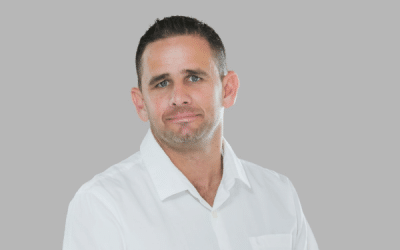
Jason Lombard: Sustainability as a key to business success
Jason Lombard, CEO DPD Laser, shares how each month, DPD Laser buys carbon offset credits in response to 3.75 tonnes of carbon, and fund local projects that focus on alleviating poverty by improving the land and livelihoods of severely disadvantaged communities.
There’s no clearer imperative for the sustainable future of our world and society than the need to reduce or mitigate carbon emissions. Nearly all land areas are warmer than they have been in history, with severe storms, increased rainfall, flooding, landslides, and droughts causing damage to life and infrastructure.
There’s nothing that any single person can do to change all of this – but if we all work together, and make better choices about how we live and do business, there’s a greater chance that climate change can be slowed, and our environment protected and nurtured.
That’s why at DPD Laser, a GeoPost parcel delivery business in South Africa, we’ve taken extensive steps to mitigate our impact on the environment. It’s not possible yet to convert our fleet of vehicles to electric alternatives, for many reasons, but we continue to monitor developments in this area.
We’re inspired by GeoPost’s achievement of being the first global delivery company to have both its near and long-term CO2 emissions reduction target approved by the Science Based Targets initiative (SBTi).
The pathway to achieving the group’s plan to reach net-zero by 2040 sets us all on a clear path to be the international reference in sustainable delivery.
While it’s not yet feasible in South Africa, the global business is diversifying its fleet to include alternative powertrain technologies such as biogas, biofuel, electric, and hydrogen-powered trucks, as well as shifting more parcel transport to rail transport options.
Other interventions – already underway in South Africa – include switching to renewable energy to power our logistics sites and offices, so that we can meet our global goal of using 70% of our energy from renewable sources by 2030.
We’ve started with the simple things: creating and implementing a smart system to improve our first-time, on-time delivery results. This not only makes sense for the people who are receiving our goods (and the businesses who are sending them), it means that our drivers don’t waste fuel and time on failed deliveries. Very practically, we’ve removed some of the copies from our waybills and we have converted 80% of our paper-based proof of delivery documents to sign on glass, reducing our paper consumption and associated costs.
We’ve been creative in finding ways to reduce our environmental impact within local frameworks and conditions too. We work with a trusted fleet management company to gather data about our vehicles’ fuel consumption. This supports green fleet management by highlighting aggressive driving behaviour, excessive idling, and other environmentally harmful actions. We spend time with our drivers, training them about the importance of driving more efficiently – which means they’re driving more safely too.
This fleet management system calculates the total CO2 emissions of our fleet, and we’ve partnered with Credible Carbon, a South African registry that promotes access to the global carbon market, offering access to local poverty-alleviating carbon offset projects.
Each month, DPD Laser buys carbon offset credits in response to 3.75 tonnes of carbon, with this money used to fund local projects that focus on alleviating poverty by improving the land and livelihoods of severely disadvantaged communities.
Currently, we support projects in Khayelitsha, Uitenhage, Stellenbosch and Hermanus, all of which create work opportunities while improving the local environment. Our teams invest their time in a range of charity days, and we use our distribution service to provide transport for various charities at low or zero cost, including supporting the SPCA, the Reach for a Dream Foundation, and local schools.
We partner with a network of owner-drivers for more than half of our deliveries, fostering and nurturing small business growth to emerging entrepreneurs across South Africa.
As a responsible business within South African and global contexts, we know that it’s absolutely the right thing to do to take every step possible to reduce our impact on the environment. While we’ve already implemented so many changes to how we do business, we know that there’s still so much to be done, and we’re determined to continue on our path to being a significant part of the global group achieving its net zero goals.
By Jason Lombard, CEO of DPD Laser in South Africa.
Related Articles
Related
South Africa’s connectivity future depends on people, not just percentages.
Here’s the truth about how connectivity is seen broadly. Walk into any boardroom and you will hear comforting numbers. 99.9% uptime and megabits per second north of 100. C-suites might talk about ironclad SLAs.

The water is changing. Reimagining Governance for an Infinite Game
There are two young fish swimming along when they meet an older fish swimming the other way. The older fish nods and asks, “Good morning. How’s the water?” The young fish swim on for a while until one turns to the other and asks, “What the hell is water?”
AI tool Maski to solve South African education via WhatsApp
Maski Surpasses 100,000 Users as It Moves Toward One-on-One Learning for Every Child Maski, South Africa’s AI-powered education assistant, has reached a major milestone, passing 100,000 users just months after its launch in March. Built by Bytefuse in partnership with...