
Innovations that have been developed to aid healthcare around the world
Technology has been created in order to make our lives easier and more convenient.
- Immunotherapy
Immunotherapy is a type of cancer treatment that helps the immune system fight cancer. This treatment has the potential to significantly extend the survival for cancer patients, without the negative side effects and related healthcare costs of traditional chemotherapy. Immunotherapy has the same functions as the immune system of the human body which detects and destroys abnormal cells however, in the case of Immunotherapy it most likely prevents or curbs the growth for cancer. Immunotherapy helps the immune system to better act against cancer. There are different types of Immunotherapy that has different ways of aiding a cancer infected body. This treatment can be given to a patient in one of 4 ways. Intravenous, which is injected directly into the vein and intravesical, which goes directly into the bladder. This treatment also comes in the form of a capsule that can be swallowed as well as an ointment to be rubbed onto the skin for early stages of cancer. Although Immunotherapy has been a big medical breakthrough there is still research being done on how to better this treatment and eliminate or reduce side effects.
- Truvada for PrEP
Truvada for PrEP is a once daily prescription medicine for adults and adolescents at risk of HIV who weigh at least 35 kg. It helps lower the chance of getting HIV through sex. This use, in which the treatment is given before the person may be exposed to HIV, is called Pre-Exposure Prophylaxis (PrEP). Person must be HIV negative before and while taking Truvada for PrEP. Although this treatment may sound like the ideal prevention for HIV there are also many side effects both short term and long term that comes with it. There are a lot of considerations before starting this treatment which include medical background, pregnancy, breastfeeding and the intake of any kind of medication.
- Bioprinting
Bioprinting is an additive manufacturing process similar to 3D printing however, instead of using objects bioprinters print with cells and biomaterials, creating organ-like structures that allow living cells to multiply. Bioprinting is a very new technology that has the potential to benefit the medical industry in many ways. This is a technique to fabricate tissues and organs through periodic arrangement of various biological materials including biochemicals and biocells in a precisely controlled manner. A lot of precision goes into the three basic steps of Bioprinting. The three stages of Bioprinting are called Pre-Bioprinting, Bioprinting and Post-Bioprinting. This new innovation can have a huge impact on a range of applications such as drug development, artificial organs and wound healing. There are different types of Bioprinting that can be used for multiple different applications.
- SmartPill
The SmartPill is a small capsule that a gastroenterologist uses to monitor the PH, pressure, transmit time and temperature throughout the gastrointestinal tract (GI) of the human body. This is an indigestible capsule that transmits information wirelessly to a data receiver worn on a belt. The SmartPill allows a gastroenterologist to evaluate motility disorders such as nausea, bloating, acid reflux, constipation, gastric starting time, colonic transit time, whole gut transit time, pressure patterns and gastroparesis. This pill requires a 20 minute doctor’s visit in which the pill will be provided to the patient as a meal taken with small sips of water. This pill detects the GI problem effectively and has the capability to resolve the problem before it can get any worse or before it’s too late.
- Virtual Reality in Hospitals
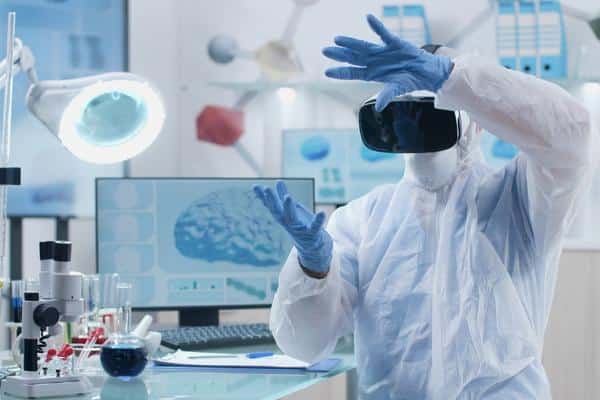
Although Virtual Reality (VR) is known for video games, researchers have found a use for it in hospital training. VR allows medical professionals to do their medical training in virtual reality before putting into practice in the real world. VR training could be used for anything from making a diagnosis to doing operations. This is a great way to train new medical professionals by using VR instead of actual human beings. Although this provides room for learning errors it should still be taken as seriously as if it were training in real life. This training has increased the safety of many surgeries and helped many trainee surgeons to learn skills and techniques to take into the real world.
- Nanobots
Nanobots are incredibly tiny robots down a microscopic slide. These tiny little robots are used in many different medical industries from dentistry to neurology.
- One main application of Nanobots is to copy red platelets. The all-out size of the respirocyte would be around one micron or 1000 nanometers; making it multiple times less than an ordinary red platelet. This plan would permit the robots to pass into the littlest vessels and guarantee significantly more proficient conveyance of oxygen to tissue than is conceivable with natural red cells. It’s likewise intended to convey multiple times more oxygen and carbon dioxide than an ordinary platelet. The health advantages of working respirocytes would be gigantic. For starter, the gadget will assist researchers with making productive and enduring counterfeit blood substitution liquids, for use in blood bondings, and medical aid situations. Its capacity to wriggle through veins and convey more oxygen to the cerebrum can bring another help for patients experiencing cardiovascular illness.
- The applications of Nanobots can even extend as far as cancer diagnosis and treatment are researchers have been trying Nanobots to search out and obliterate disease cells effectively. The Nanobots would work like white platelets, watching the circulation system and searching for indications of trouble. At the point when the robots perceive an objective cell, they will deliver a minuscule however destructive freight of medications or nanoparticles. These nanoparticles would then meddle with the development of the malignancy cells and power them to fall to pieces. This kind of exactness medication permits the tumor cells to be focused on while letting solid cells be. This is huge as it could likewise diminish the results of chemotherapy. Scientists infused Nanobots into the circulation system of the guineas pigs. The Nanobots went through the circulation system, directed the veins around malignant tumors, and delivered blood coagulating medications to remove the blood supply to the tumors. As indicated by the examination, the treatment was effective in contracting the tumors and hindering their spread. Unlike a drug delivered to treat cancer, for example, where what is important is the adequacy with which it treated it, with Nanorobots we additionally need to comprehend the interaction, the developments that occurred inside the body, etc. That is significantly harder and there is certainly not an incredible method to do that presently, however PC reenactments have begun to be useful around here.
- Robotic Surgery
Robot-assisted surgery or Robotic surgery allows doctors to perform several complex procedures with high control, precision and flexibility than is possible with conventional methods. The commonly used clinical robotic surgical system comprises a mechanical arm and camera arm attached with surgical instruments. The surgeon controls the mechanical arms through a computer console near the operating table that gives the surgeon a magnified and highly defined 3-D view of the surgical area.
- Smart Inhalers
Smart inhalers are inhalers that have extra digital features, i.e., they are linked to an app on your smartphone that allows patients and doctors to manage asthma better. Smart inhalers even have sensors that can work out if you’re in high pollen or high pollution area. These sensors send reminders and even let you know when an inhaler is needed. Smart inhalers are designed to automatically track how often someone is using their inhalers and keep the record.
- Artificial Intelligence
Artificial intelligence (AI) takes on many different forms in healthcare. The primary trend for AI in healthcare 2022 will be in utilizing machine learning to evaluate large amounts of patient data and other information. By creating tailored algorithms, programmers can mimic human thought and write programs that can seemingly think, learn, make decisions, and take action. This does not mean that medical care will suddenly be delivered by sentient robots. However, it does mean that, given a patient’s particular medical records, history, and current symptoms, physicians may be given suggested diagnoses, medications, and treatment plans. The physicians will always have the final say, but the information will be at their disposal.
- Digital Therapeutics
Patients that have chronic illnesses often require ongoing care from their physicians. This care can include patient education, symptom monitoring, medication adjustment, and behavioural changes. Not only is this care costly, but it is also very time-consuming for both medical staff and patients. Now, there is new digital therapeutics that can fill this role. Digital therapeutics is prescribed by a doctor to a patient for their particular medical condition. These sophisticated software programs can be accessed as apps on a patient’s smartphone or through a personal computer. They go through the same rigorous testing as all medications, including randomized clinical trials. Medical conditions that are well suited for digital therapeutics include diabetes type I and type II, cancer, anxiety, musculoskeletal pain, ADHD, asthma, migraines, insomnia, and substance abuse. As patients use the applications, information about their wellbeing is reported back to their physician. This allows doctors to be able to monitor patients without having to see them regularly, as well as spot problems much earlier than when a patient needs to wait for an appointment.
The world is evolving tremendously in ways that make our lives easier. The medical industry has been thriving with new and improved breakthroughs that are changing many lives around the world.
Related Articles
Related

South Africa’s connectivity future depends on people, not just percentages.
Here’s the truth about how connectivity is seen broadly. Walk into any boardroom and you will hear comforting numbers. 99.9% uptime and megabits per second north of 100. C-suites might talk about ironclad SLAs.
The water is changing. Reimagining Governance for an Infinite Game
There are two young fish swimming along when they meet an older fish swimming the other way. The older fish nods and asks, “Good morning. How’s the water?” The young fish swim on for a while until one turns to the other and asks, “What the hell is water?”

AI tool Maski to solve South African education via WhatsApp
Maski Surpasses 100,000 Users as It Moves Toward One-on-One Learning for Every Child Maski, South Africa’s AI-powered education assistant, has reached a major milestone, passing 100,000 users just months after its launch in March. Built by Bytefuse in partnership with...